A roofing material should suit the building before it suits a colour preference. Pitch, supporting structure, exposure, roof shape and the details around chimneys all influence the choice. A period cottage, a newer estate house and an extension can require different systems even on neighbouring plots. This guide compares tile, natural slate, EPDM and lead without suggesting there is one best material for every home. It also explains questions worth asking before agreeing a roof replacement. First establish whether renewal is necessary at all: DJW Roofing & Leadwork Ltd offers free inspections and no-obligation quotes, with honest advice and repair before replacement where possible. Material selection follows an understanding of the existing roof.
Start with pitch, structure and roof geometry
Tile and slate coverings need a suitable pitch and overlap to shed rain, with requirements varying by product and exposure. A flat or very low-pitched area is not automatically suitable for the covering on the main house. Weight matters as well: choosing a different material should take account of the supporting structure rather than relying on visual similarity. Valleys, dormers and abutments complicate the geometry and may require specialist junction details. Ask how the proposed material fits the actual roof and whether further structural assessment is needed before changes are agreed.
Clay and concrete tiles
Tiles are available in a range of profiles, colours and fixing arrangements. Clay and concrete options can both provide effective weather protection when suitable products are correctly specified and installed. Their appearance, weight and overlap differ, so a replacement should not be chosen from colour alone. A plain-tile roof and an interlocking tile roof may have different layout requirements. Availability can also affect how well a local repair matches an older covering. Ask which product is proposed, why it suits the pitch and how the battens and fixings will be arranged for that particular roof.
Natural slate for character and careful detailing
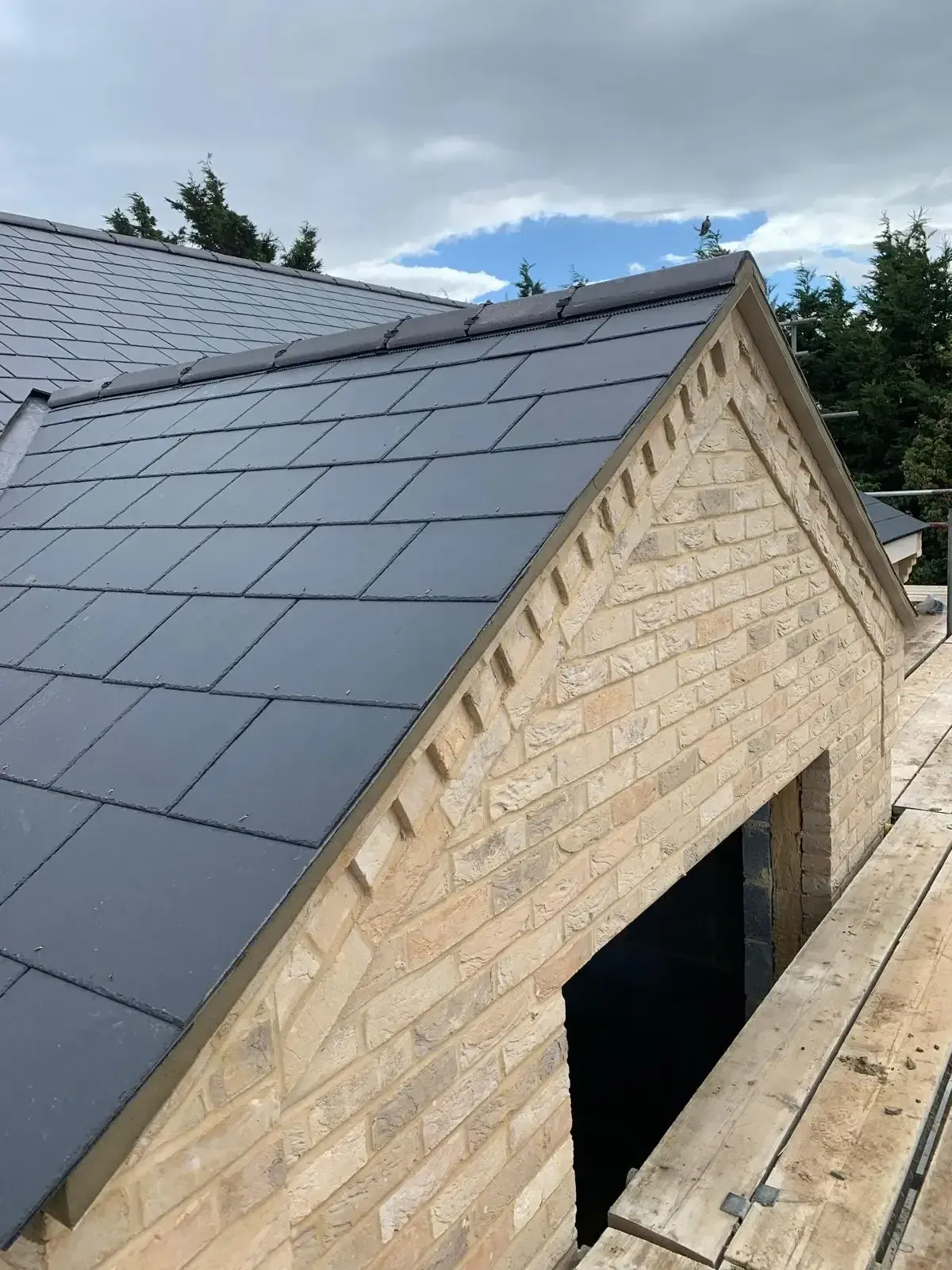
Natural slate has variation in colour, thickness and texture, making it a distinctive covering for many period properties. Its long-term performance depends on quality, correct overlap and dependable fixings, not simply the name of the material. An older slate roof may contain serviceable stone with deteriorating nails, while other slates may be cracked or breaking down. Inspecting this difference matters before deciding on renewal. For repairs, matching size and appearance as closely as possible may be appropriate, but an exact match is not always available. The proposed installation should address supports, junctions and fixing methods as well as the visible stone.
EPDM for flat roofs, extensions and dormers
EPDM is a flexible synthetic rubber membrane used on many domestic flat roofs. A straightforward roof can be covered with a largely seamless sheet, although edges, penetrations and connections still need careful details. A suitable clean deck and the specified bonding system are important. Falls should guide water to drainage, while trims and upstands must remain secure. Correctly installed and specified EPDM can provide 20+ years of service; this is a material performance expectation, not a fixed guarantee term for every installation. Discuss the condition of the deck and drainage rather than selecting the membrane in isolation.
Leadwork where materials and masonry meet
Lead is commonly used for flashings, soakers, valleys, ridges and dormer details where a roof changes direction or meets a wall or chimney. Correct code, support, section arrangement and room for thermal movement influence performance. DJW removes failing lead, chases the masonry line properly and shapes the material with a straight edge and lead dresser. Properly installed leadwork can provide 60–100 years of service, but a poorly arranged junction can fail much sooner. Ask how the lead detail will work with the chosen tiles, slates or membrane rather than treating it as a decorative finishing strip.
Consider membrane, battens and ventilation together
The visible covering is part of an assembly. DJW’s complete re-roofing process strips back to the timbers, repairs damage, fits new breathable membrane and gauges battens to the tile before laying the covering. Breathable underlay does not remove the need to assess ventilation, insulation and the roof’s construction. Ridges and verges are bedded or dry-fixed according to the appropriate specification. The quote should make these layers and details clear. Two proposals using similarly coloured tiles may have very different supporting work, so ask about the complete scope rather than comparing the covering alone.
Respect planning, listed buildings and conservation
An existing material may be part of the character of a terrace, cottage or protected building. On listed buildings and within conservation areas, check what approval is required before changing materials, appearance or details. Do not assume that a roofing contractor’s preferred product establishes planning permission or exemption. The local authority or an appropriately qualified adviser can clarify the requirements. Like-for-like work may still involve conditions depending on the property. Discuss roofing options with those requirements in mind before ordering materials, and avoid changes that could cause difficulty even if the proposed covering is technically suitable.
Compare the proposed work and make a considered choice
A useful quote explains preparation, covering, junctions and the scope of any repairs rather than only naming a material. Ask what remains, what is removed and what happens if damage is found underneath. Consider appearance and future inspection alongside the suitability of the assembly. Guarantees should be discussed for the actual job, not assumed from a material’s general lifespan. DJW is fully insured, guarantees its work and brings 15 years’ roofing experience from Littleport, Ely. Free inspections and no-obligation written quotes let you explore tile, slate, EPDM and hand-dressed leadwork without pressure to replace a roof unnecessarily.