
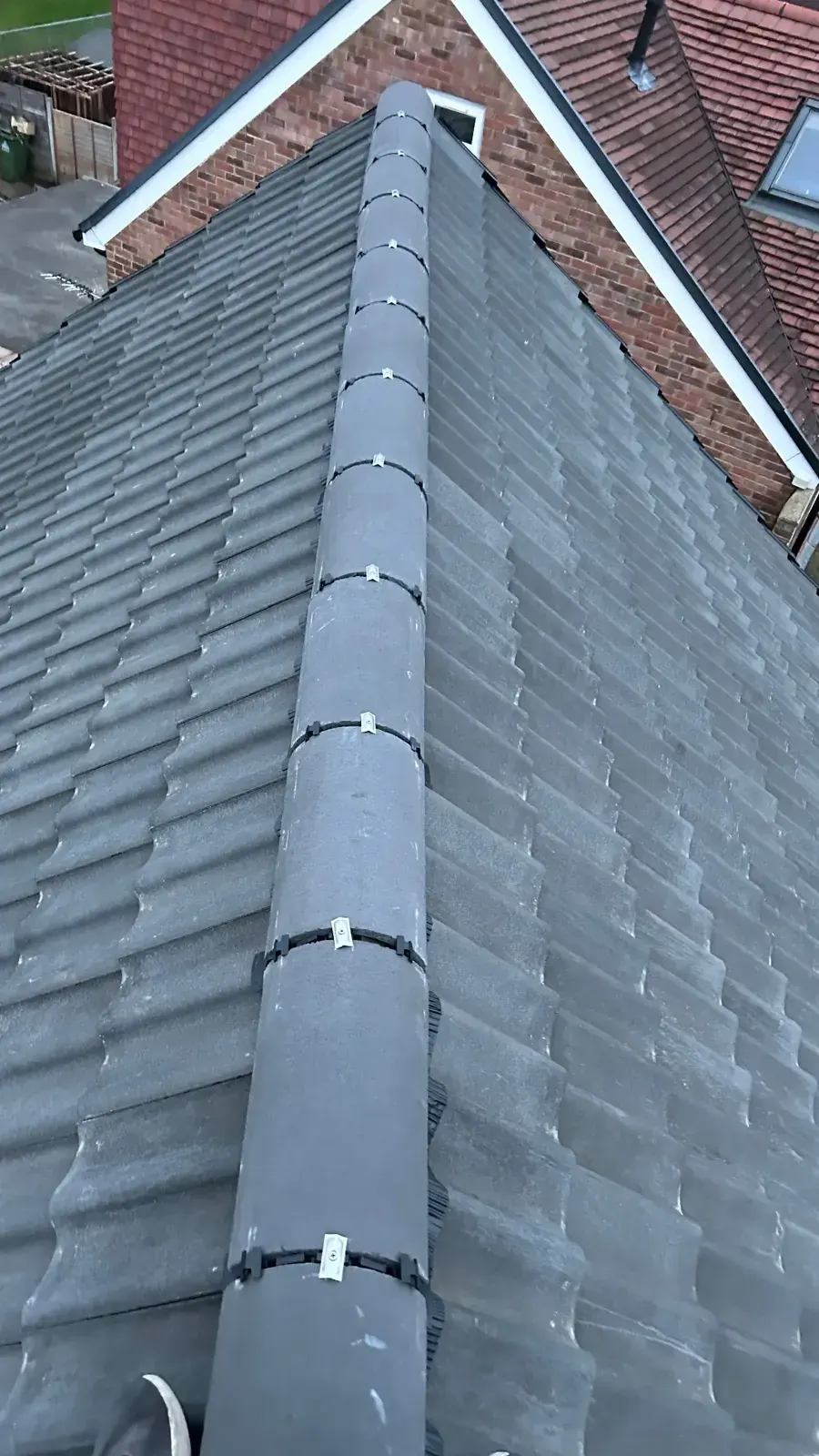
Dry Ridge & Dry Verge Systems
Ridges and verges finish the most exposed parts of a pitched roof. When mortar cracks or coverings become loose, water and wind can affect both the edge and the layers below.
Ridges and verges finish the most exposed parts of a pitched roof. When mortar cracks or coverings become loose, water and wind can affect both the edge and the layers below. DJW Roofing & Leadwork Ltd repairs these details and installs suitable dry ridge and dry verge systems across Ely and Cambridgeshire. Danny has 15 years’ roofing experience and offers a free inspection before recommending the right approach. A dry-fixed system can replace dependence on mortar bedding, but it still needs to be compatible with the roof rather than treated as a universal clip-on solution.
Why traditional ridge and verge mortar fails
Mortar is exposed to wet weather, frost and movement along the roof line. Over time it can crack, lose its bond or crumble, leaving ridge tiles unsecured or gable edges vulnerable. The visible gap might be small while the bedding beneath has deteriorated more widely. Inspection checks the condition of the tiles, mortar and adjoining covering together. A repair needs to address what is holding the detail in place, not simply conceal cracks with a thin surface coat that leaves the original weakness underneath.
Mechanically fixed dry ridge systems
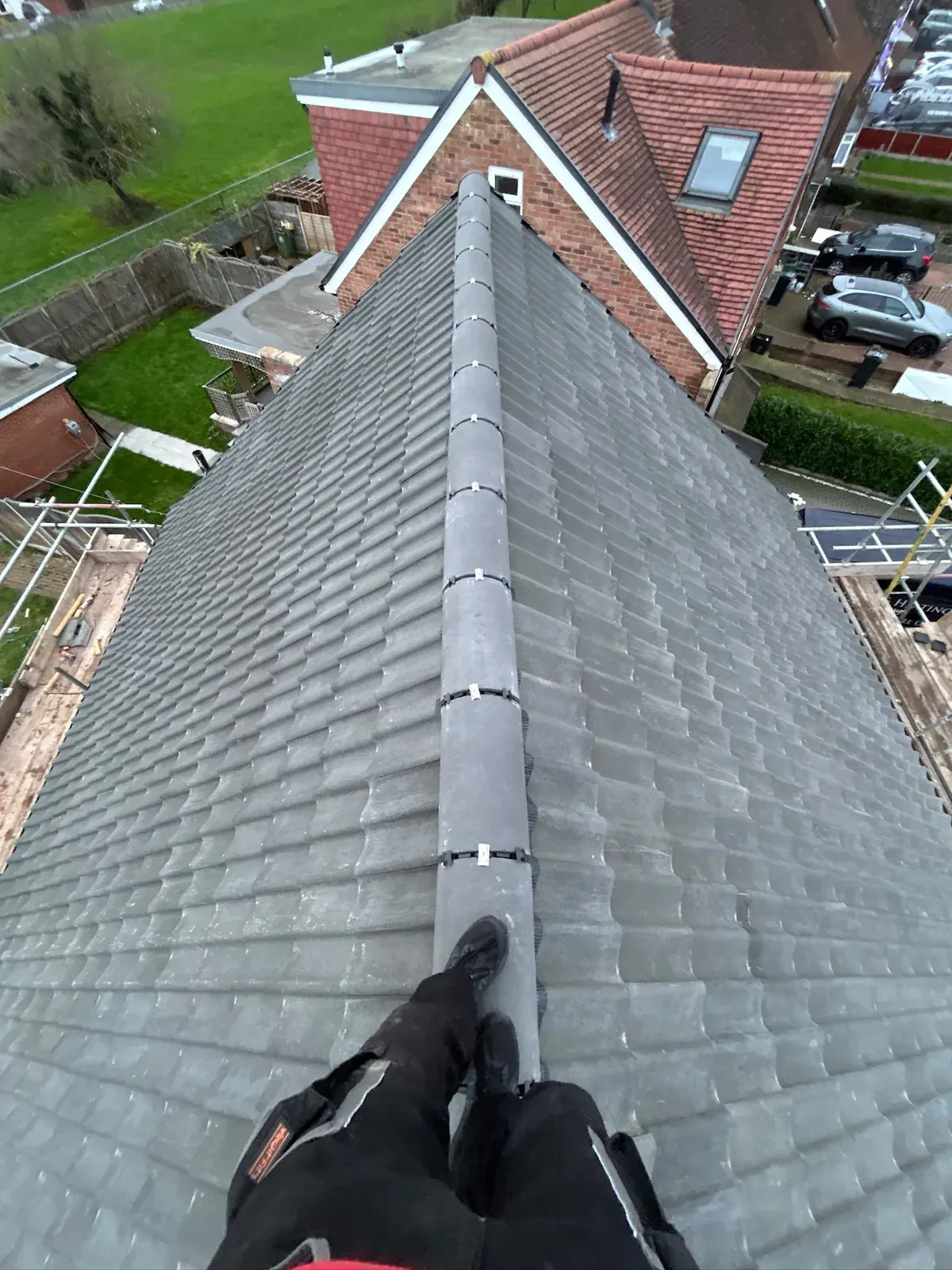
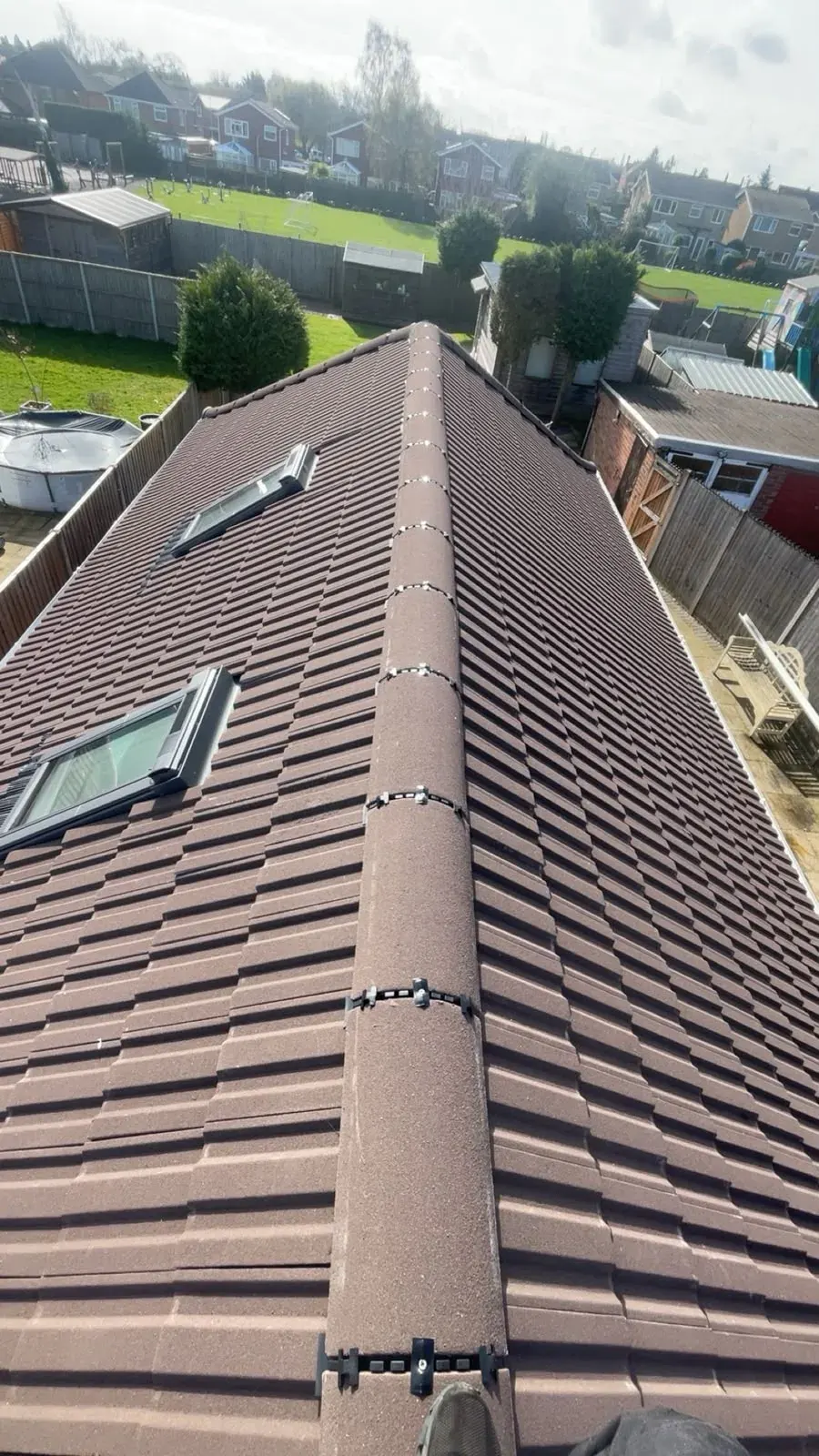
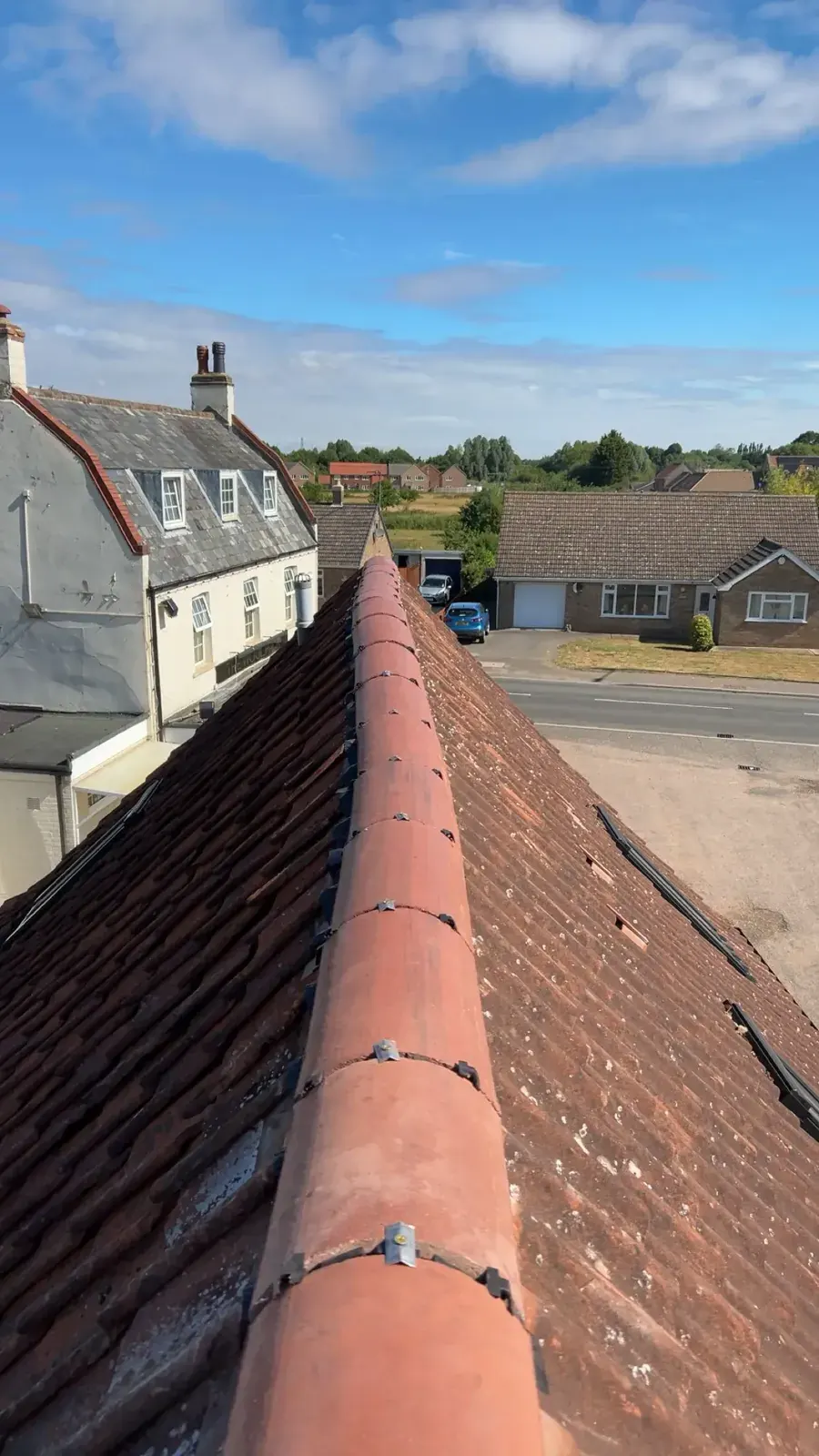
A dry ridge system uses a designed fixing arrangement to hold ridge tiles rather than relying on mortar alone. Weatherproof components manage the joints, and appropriate systems can contribute to ventilation at the roof’s high point. The exact arrangement must suit the tile type, roof pitch and chosen system. Compatibility, support and fixing into the underlying structure matter more than a generic claim that all dry systems are identical. DJW considers these details when explaining the proposed work and whether a particular roof is suitable for conversion.
Dry verge protection at gable edges
Dry verge units finish the tile ends at the gable, giving a mechanically secured edge without exposed mortar bedding as the main fixing. They need to suit the covering and the line of the existing verge. Poorly aligned or inadequately supported units can still cause problems, so the old detail and supporting timber should be assessed before installation. Exposure to driven rain is particularly relevant on open fenland sites, but the right solution is based on the actual roof rather than a blanket rule for every property in the area.
Repairs, replacement and traditional alternatives
Some roofs are appropriate for a local ridge or verge repair, while others justify replacement of the complete detail. Traditional bedding remains an option where it suits the roof and agreed specification. For older or protected buildings, appearance and consent may influence the choice, so checks should be made before changing the roofline. DJW’s honest approach is to explain the available options and why one is recommended. A dry system removes the particular maintenance issue of mortar bedding; it does not make every roof component maintenance-free.
A complete detail, not an isolated accessory
Ridge ventilation, underlay, tile condition and supporting battens can affect how a new system works. Any related faults should be identified rather than left hidden beside the finished units. During a re-roof, ridge and verge choices are considered alongside the membrane, gauged battens and covering. For a standalone repair, the scope should show what is being renewed and what remains. All DJW work is guaranteed and the company is fully insured. A free, no-obligation written quote lets you review the proposed approach without pressure to agree to unnecessary roof replacement.
How we work.
A free inspection
We look at your roof carefully and explain what we find.
An honest written quote
Clear advice and a no-obligation quote. Repair before replace, where possible.
Careful, tidy work
Proper preparation, attention to the details and a daily tidy-up.
Work guaranteed
Fully insured. All work guaranteed. A roof finished properly.
Dry ridge & verge
FAQs.
What is the difference between dry ridge and mortar?
Dry ridge uses a mechanical fixing system with designed weatherproof joints rather than mortar as the principal bedding detail. The system needs to match the covering and roof.
Can dry verge be fitted to an existing roof?
Often, if the tile type, existing edge and support are suitable. We inspect before recommending a system or deciding whether preparation or other repairs are needed.
Will a dry system make the roof maintenance-free?
No. It removes the specific issue of failing mortar bedding in that detail, but coverings, drainage, fixings and other roof parts still need appropriate inspection and care.
Do you still repair mortar-bedded ridges?
Yes. Traditional repairs or bedding can remain the appropriate choice. The roof condition, appearance, specification and any relevant permissions guide that decision.
Do I need a full new roof for a verge problem?
Not necessarily. A ridge or verge repair can be localised if the surrounding roof is sound. DJW recommends only the work justified by the free inspection.
Related services.
Areas we cover.
Good work starts
with honest advice.
Free roof inspections. Free no-obligation quotes. Just the work your roof actually needs.
07862 885143Klarna.Klarna availableBased in Littleport, Ely.
Covering Cambridgeshire, Norfolk, Suffolk, Hertfordshire, Lincolnshire and North London.
Open 24 hours, 7 days.