A roof problem is not always a dramatic storm event. A small stain after rain, a slate that has moved or mortar debris by a gable can be an early reason to seek advice. Recognising signs helps you describe the issue accurately without deciding on the repair yourself. The same symptom can have several causes, and damage visible indoors may be some distance from the point where water entered. This guide sets out observations you can make safely and when a professional inspection is the right next step. Do not climb onto the roof, investigate loose chimney materials or enter an unsafe loft. DJW’s approach is to inspect and recommend only the work the roof actually needs.
New damp marks on ceilings and upper walls
A stain appearing during or after rain can indicate water ingress, but its location does not identify the fault precisely. Water may follow rafters, underlay or insulation before reaching a visible surface. Note the room, weather conditions and whether the mark is growing. A faded stain is not proof that the underlying issue has resolved. Other causes, including condensation or plumbing, may need considering, so do not assume a complete re-roof is the answer. Keep water away from electrical fittings and avoid standing beneath a ceiling that is sagging or visibly damaged.
Missing, slipped or cracked coverings
From a safe ground-level view, a gap or displaced tile deserves attention even when there is no visible leak inside. The underlay is a secondary weather layer, not a reason to ignore damage to the main covering. A slate may move because its fixing has failed, while a tile can be affected by impact or wind. The surrounding courses and supporting details should be checked before assuming it is only a matter of pushing one piece back. An isolated fault can often be repaired, but the appropriate fixing and scope need professional assessment.
Loose ridge tiles and crumbling verge mortar
Pieces of mortar on the ground near a roof edge can point to failing bedding, though the source should be verified. Ridge tiles and gable verges are exposed details, and cracks can develop through weathering and movement. A thin surface patch may hide deterioration without restoring support. A suitable repair might involve proper bedding work or a compatible dry ridge or verge system. Dry fixing removes reliance on mortar in that detail, but it does not make the whole roof maintenance-free. If tiles or masonry could fall, keep people away and seek urgent advice.
Changes around chimneys and lead flashing
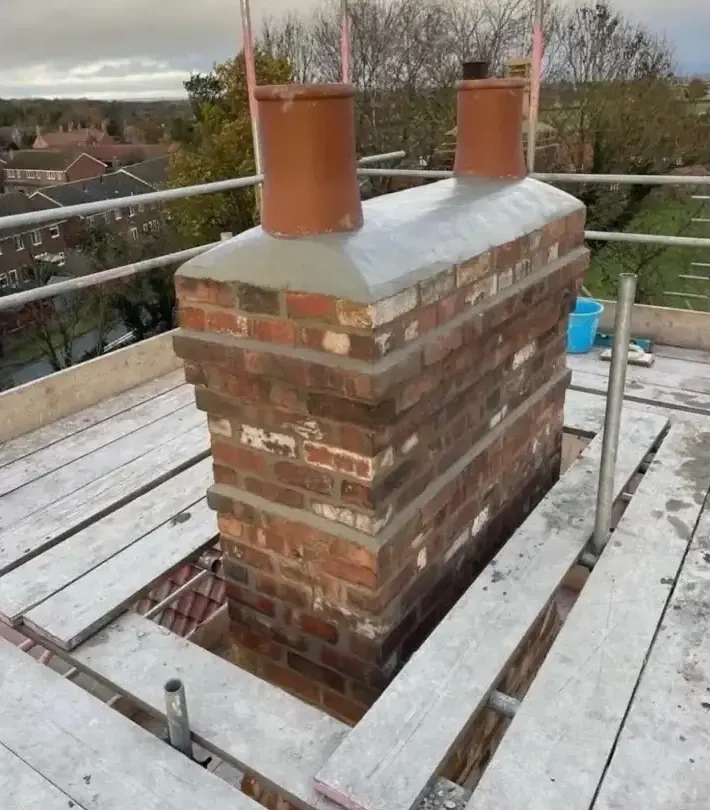
Damp near a chimney breast can originate in leadwork, mortar joints or the top of the stack. Flashings at walls and dormers are further points where water may enter while the main slope looks intact. Visible lifting, split lead or a detached edge is worth reporting, but colour alone does not establish the condition. A complete inspection considers how flashings, soakers and the adjoining tiles or slates work together. Repairing a chimney leak should not mean guessing at one detail and ignoring the others. Loose chimney materials are a falling hazard and should not be investigated by a homeowner at height.
Repeated flat-roof leaks or persistent ponding
On a flat roof, a leak may come from an outlet, trim, upstand or penetration rather than a tear across the middle. Persistent standing water can point to inadequate falls or drainage obstruction. Observe only where the roof can be seen safely; do not step onto a membrane or use an unstable ladder. The deck below a covering can also be damp-affected, so replacing the membrane without assessing its support may leave a problem in place. Describe whether the leak is continuous or follows certain weather, and whether visible water remains in one area.
A roofline that appears newly uneven
A visible change in the roof line deserves assessment, particularly if it is new or accompanied by cracking or other signs inside. Older buildings can have longstanding irregularities, so a distant view alone cannot establish structural failure. Compare photographs if you have them, but do not dismiss an apparent new dip or investigate by walking on the roof. Where movement or damaged supporting timber is suspected, a roofing inspection may identify the need for further qualified structural advice. Keep the description factual: when you first noticed it, where the change is and whether it has developed.
Recurring faults after previous patch repairs
A repair that has to be repeated may mean the source was not resolved, the detail is unsuitable or the surrounding roof has deteriorated. That still does not prove a full replacement is necessary, but it is a reason for a broader assessment. Explain what work was previously carried out if you know, rather than relying only on the current stain. An honest recommendation distinguishes localised damage from widespread failure. For renewal, ask how the timbers, membrane, battens, covering and junctions will be addressed. For a repair, ask why that scope is likely to suit the cause found.
Decide whether to call urgently or arrange inspection
Call about active storm damage, unsafe loose materials or a sudden leak rather than waiting for a routine quote request. Stay clear of falling-material risk and of water near electrics; if there is immediate danger, use the appropriate emergency service. For less urgent concerns, safe photographs and a clear description help arrange an inspection. DJW Roofing & Leadwork Ltd offers free inspections and no-obligation written quotes from Littleport, Ely, across the stated coverage area. The company is fully insured, all work is guaranteed and emergency call-outs are available 24/7 on 07862 885143. Actual access and weather govern the repair possible.