Replacing a tired roof is one of the biggest jobs a home will ever need, and one of the first questions homeowners ask us is whether they need planning permission or Building Regulations approval. For most like-for-like re-roofs on a house, the answer is reassuring. This plain-English guide explains the general position in England, the situations where extra consent may be needed and how to check what applies to your home. It is general guidance rather than legal advice, and your local council always has the final say.
Like-for-like re-roofing usually needs no planning permission
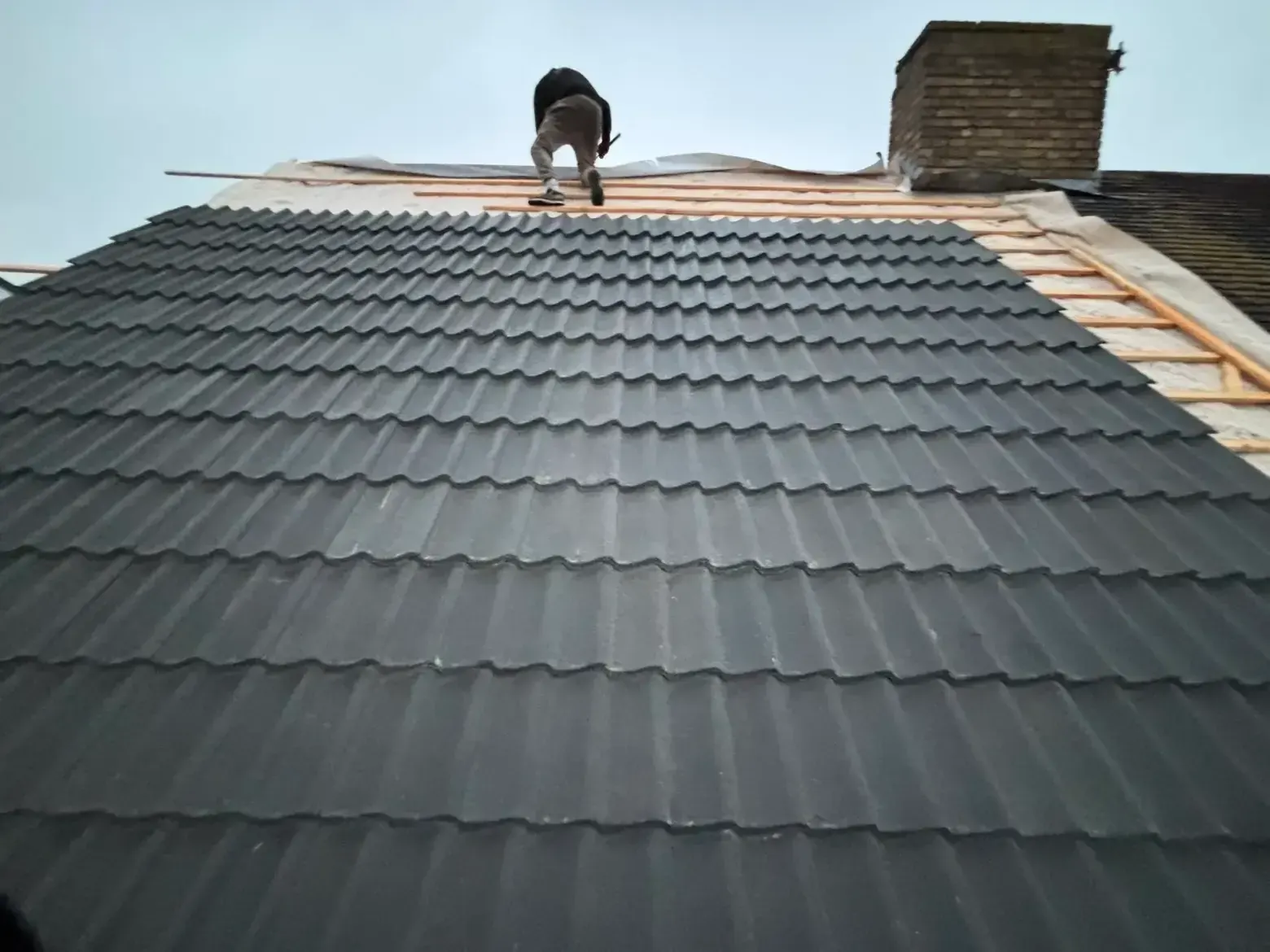
For a house, re-roofing with materials that look similar to the existing ones normally falls under permitted development. That means you can usually strip and replace the tiles or slates, renew the membrane and battens, and replace leadwork without making a planning application, as long as the shape and height of the roof stay the same.
Permitted development rights apply to houses, not flats or maisonettes, and they can be removed or restricted in some areas, so it is still worth confirming the position if you are unsure.
When planning permission may be needed
Planning permission is more likely to be needed when the work changes how the roof looks. Raising the ridge height, changing the shape of the roof, adding dormer windows or making significant alterations to the roof's appearance can all fall outside permitted development, depending on the size and position of the work.
Changing materials significantly can also be an issue. Replacing clay pantiles with a very different material, for example, may need permission, especially on a prominent elevation. Some dormers and loft conversions can be built under permitted development within set limits, but others need a full application.
Listed buildings
If your home is a listed building, you will need listed building consent for works that affect its character, and that can include re-roofing, changing materials or altering leadwork and chimneys. Carrying out work without consent can be a criminal offence, so always speak to your council's conservation officer before starting. Matching traditional materials and detailing is usually expected.
Conservation areas and Article 4 directions
Many historic town centres and villages across Cambridgeshire, Norfolk and Suffolk are conservation areas. In a conservation area, permitted development rights still exist for many re-roofing jobs, but changes to materials or the roof's appearance are more tightly controlled.
Some councils also use Article 4 directions, which remove specific permitted development rights in a defined area. An Article 4 direction can mean that even replacing roof materials with something different needs planning permission. Your council can tell you whether one applies to your street.
Building Regulations and the 25% rule
Building Regulations are separate from planning permission. They deal with how the work is done, including structure, fire safety and energy efficiency. As a general rule, replacing more than 25% of a roof's area normally needs Building Regulations approval.
When that threshold is crossed, you may also be required to upgrade the roof's insulation to meet current thermal standards, where it is technically and economically reasonable to do so. Approval can be obtained through your council's building control service or an approved inspector. Smaller repairs, such as replacing a few tiles or a section of flashing, do not usually need approval.
Changes to the structure, for example replacing a heavy material with a much heavier one, can also require checks to ensure the roof timbers can take the load.
Flats, leasehold and shared roofs
If you live in a flat or own a leasehold property, the roof may belong to the freeholder or be shared with neighbours. In that case you will usually need the freeholder's consent before any work starts, and your lease may set out who is responsible for repairs. Work on a shared or party roof can also involve neighbours, so it is wise to talk to them early.
Always check with your local council
The rules are applied locally, and each council has its own conservation areas and policies. Depending on where you live, that might be East Cambridgeshire District Council, Cambridge City Council, Peterborough City Council, the Borough Council of King's Lynn and West Norfolk, Fenland District Council, Huntingdonshire District Council or West Suffolk Council. Most have planning and building control advice on their websites, and many will answer questions by phone or email.
If you are still unsure, you can apply for a lawful development certificate, which confirms that proposed work does not need planning permission.
How we help
At DJW Roofing & Leadwork, we can advise on what is likely to apply to your roof before we quote. During a free roof inspection we look at the property, the existing materials and the work needed, and we flag anything that may need checking with your council, such as a change of material, a listed building or a roof in a conservation area.
Danny has been roofing for 20 years across Cambridgeshire and the surrounding counties, so we are used to matching materials and detailing on older homes. Find out more about our new roofs and re-roofing service, or arrange a free inspection.
Frequently asked questions
Do I need planning permission to replace my roof tiles?
Usually not, if your home is a house and the new tiles look similar to the old ones. Changes to the shape, height or appearance of the roof may need permission.
Does re-roofing need Building Regulations approval?
Replacing more than 25% of a roof's area normally needs Building Regulations approval, and you may need to upgrade the insulation.
What if my house is in a conservation area?
Many like-for-like re-roofs are still allowed, but changes to materials are more tightly controlled, and an Article 4 direction may remove some rights. Check with your council first.
Can you tell me whether my roof needs permission?
We can advise on what is likely to apply during a free inspection, but your local council gives the final answer.