Chimney Repairs in Cambridge
Many Cambridge homes were built when every room had a fireplace, and the chimney stacks are still up there long after the fires stopped being lit. DJW Roofing & Leadwork Ltd repairs chimneys across Cambridge and the surrounding villages: repointing, rebuilding the flaunching, new lead flashing, straightening or rebuilding leaning stacks, and fitting or replacing pots and cowls.
Many Cambridge homes were built when every room had a fireplace, and the chimney stacks are still up there long after the fires stopped being lit. DJW Roofing & Leadwork Ltd repairs chimneys across Cambridge and the surrounding villages: repointing, rebuilding the flaunching, new lead flashing, straightening or rebuilding leaning stacks, and fitting or replacing pots and cowls. We are a Littleport firm with 20 years in business, inspections and quotes are free, and all of our work is fully insured and guaranteed. For our other work in the city, see our page for roofers in Cambridge.
How older Cambridge chimneys tend to suffer
Much of Cambridge's older housing, from the terraces of Romsey, Mill Road, Chesterton and Newnham to the larger Victorian and Edwardian houses around De Freville and Hills Road, was built in soft brick and lime mortar. Many are in the pale gault brick that gives parts of the city its character. These materials were made to breathe and move, and they wear gradually: mortar washes out of the joints, and frost works into the brick faces.
On terraced streets, chimney stacks are usually shared over the party wall, serving fireplaces in two houses. That means a defect on the stack can affect both homes, and repairs are often best planned with your neighbour. Many stacks have also had several rounds of quick fixes over the years, such as cement pointing on soft brick or mastic smeared over the flashing, which can trap water and make matters worse.
Plenty of chimneys are no longer used, with fireplaces blocked up inside. A stack that is not in use still needs to be kept weathertight, and if it is never ventilated or capped properly, moisture can build up inside it.
Repointing and brickwork
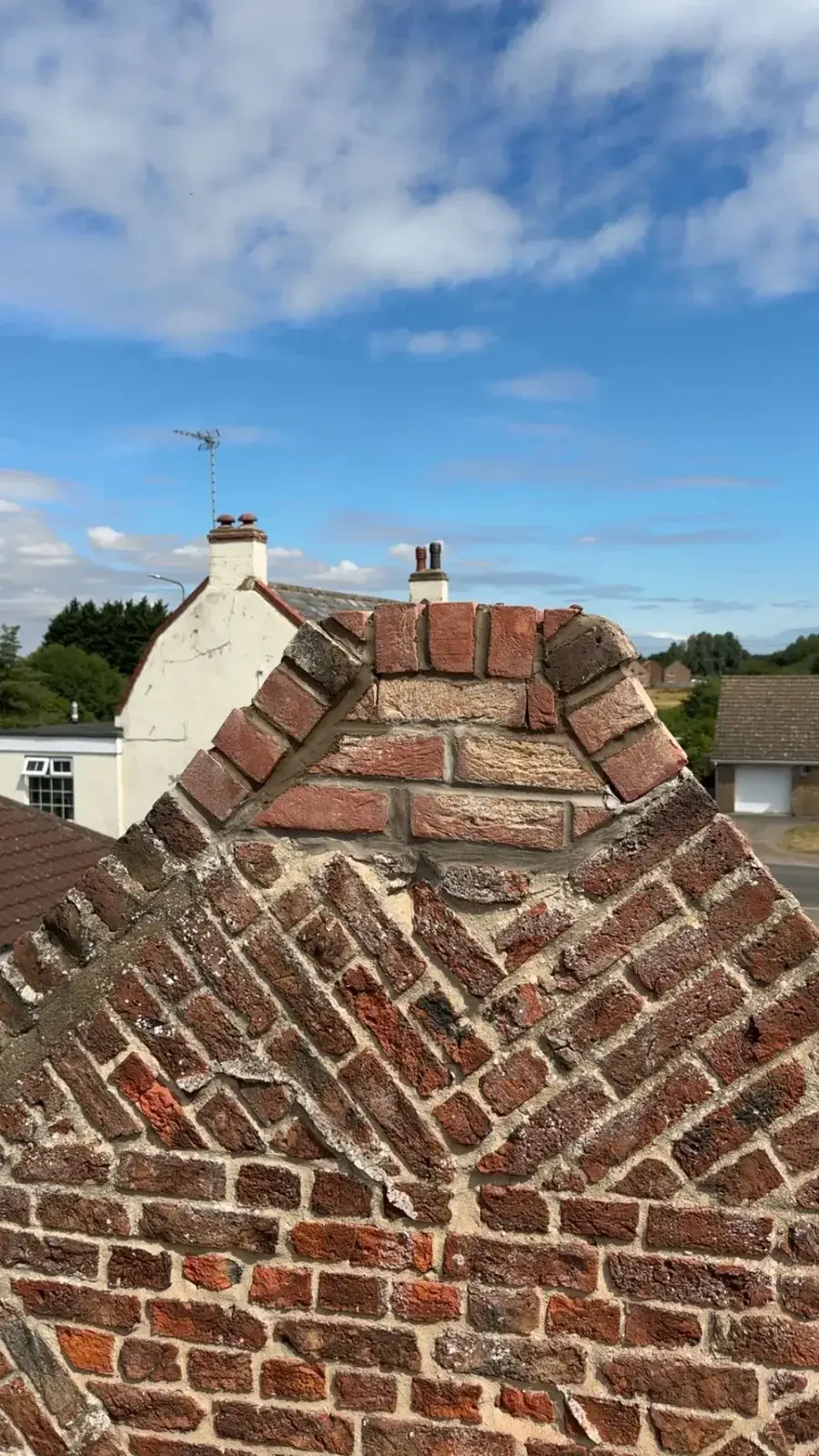
When mortar joints crumble or fall out, water gets into the stack and frost does the rest. Repointing means raking out the failed mortar and replacing it with a suitable mix, pressed in and finished properly. On older soft brick we choose a mortar that suits the brick, so the joints wear before the bricks do rather than the other way round.
Where individual bricks have spalled or cracked, they can often be cut out and replaced. Where the top of the stack has deteriorated badly, a partial rebuild from the roofline up, reusing sound bricks where possible, is often the most lasting answer.
Flaunching, pots and cowls
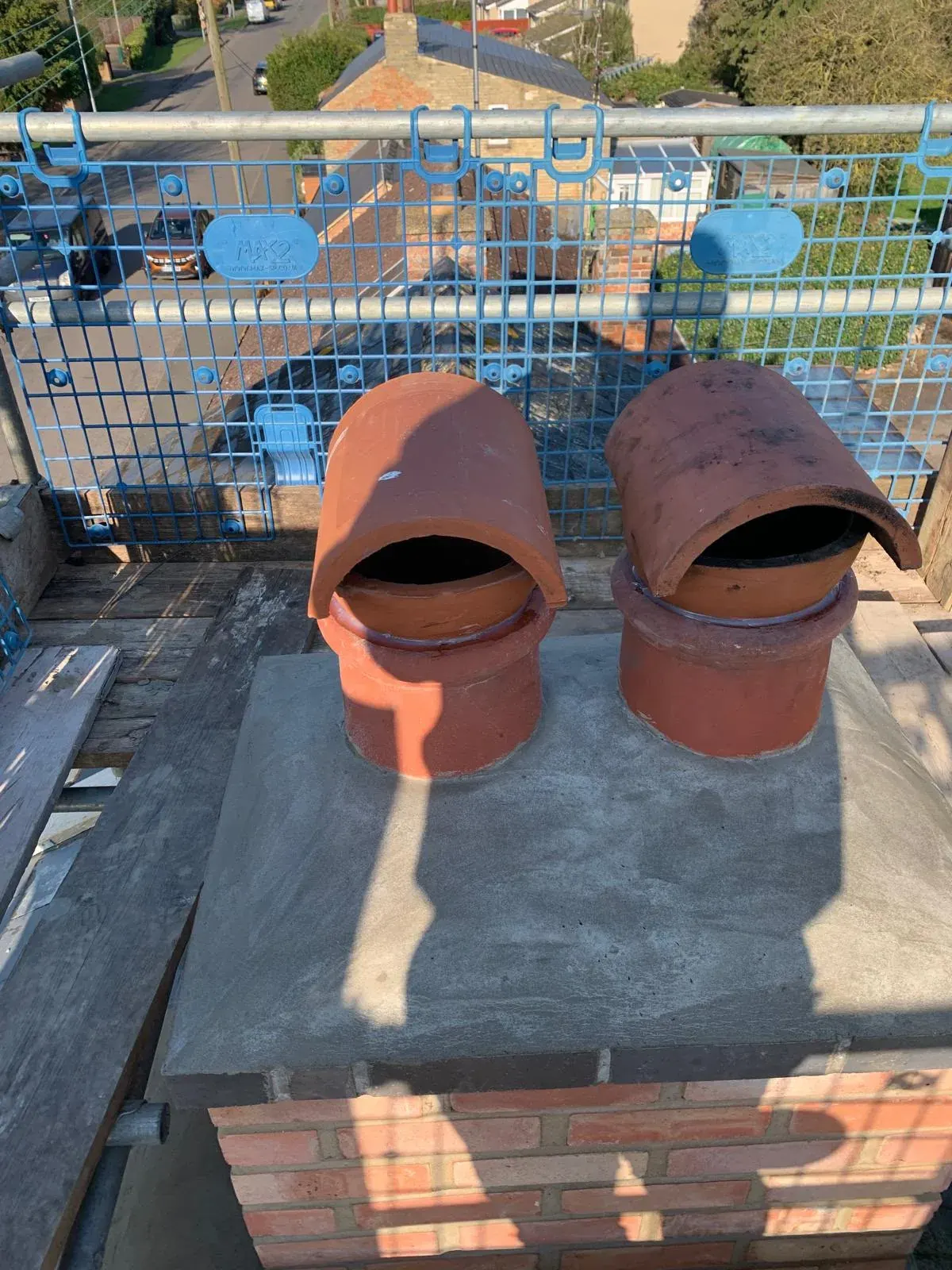
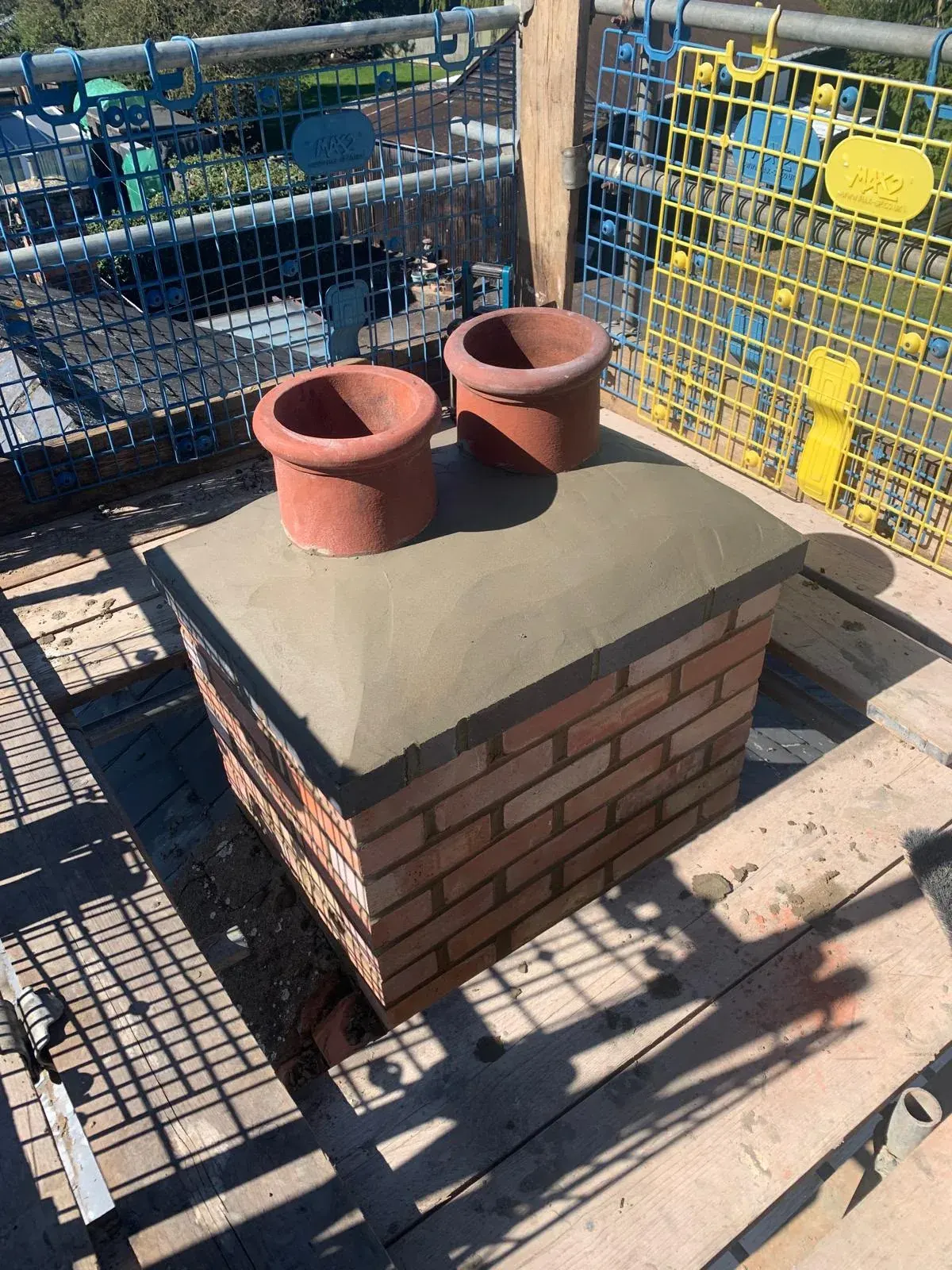
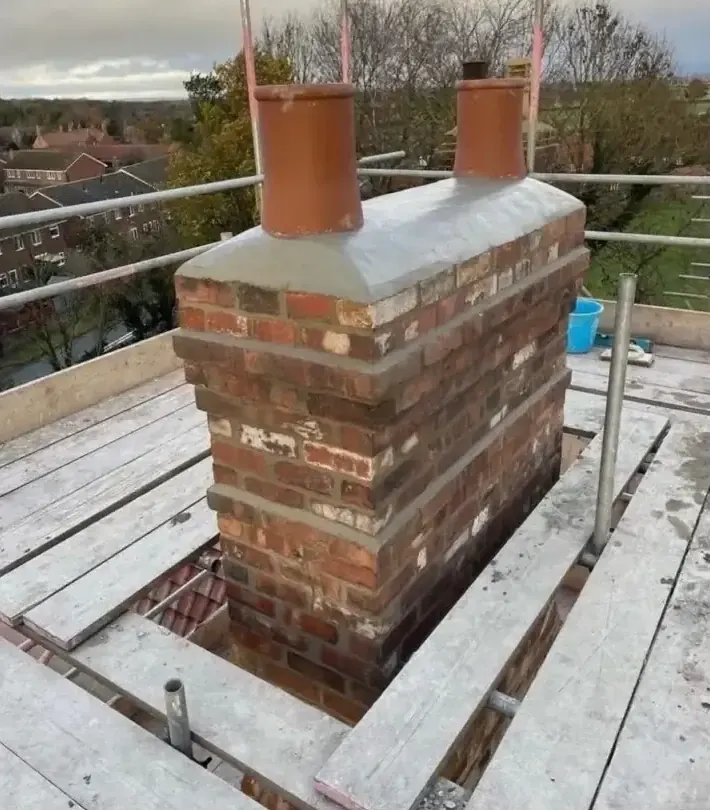
The flaunching is the sloped mortar cap on top of the stack that holds the pots and throws rain off. It takes the worst of the weather and often cracks or comes away with age, letting water straight down into the brickwork and the flues. We hack off failed flaunching and form new, bedding the pots securely.
Loose, cracked or leaning pots are re-bedded or replaced. Cowls and caps can be fitted to keep rain and birds out, and on flues that are no longer used, a ventilated cap keeps the weather out while letting the flue breathe.
Lead flashing around the stack
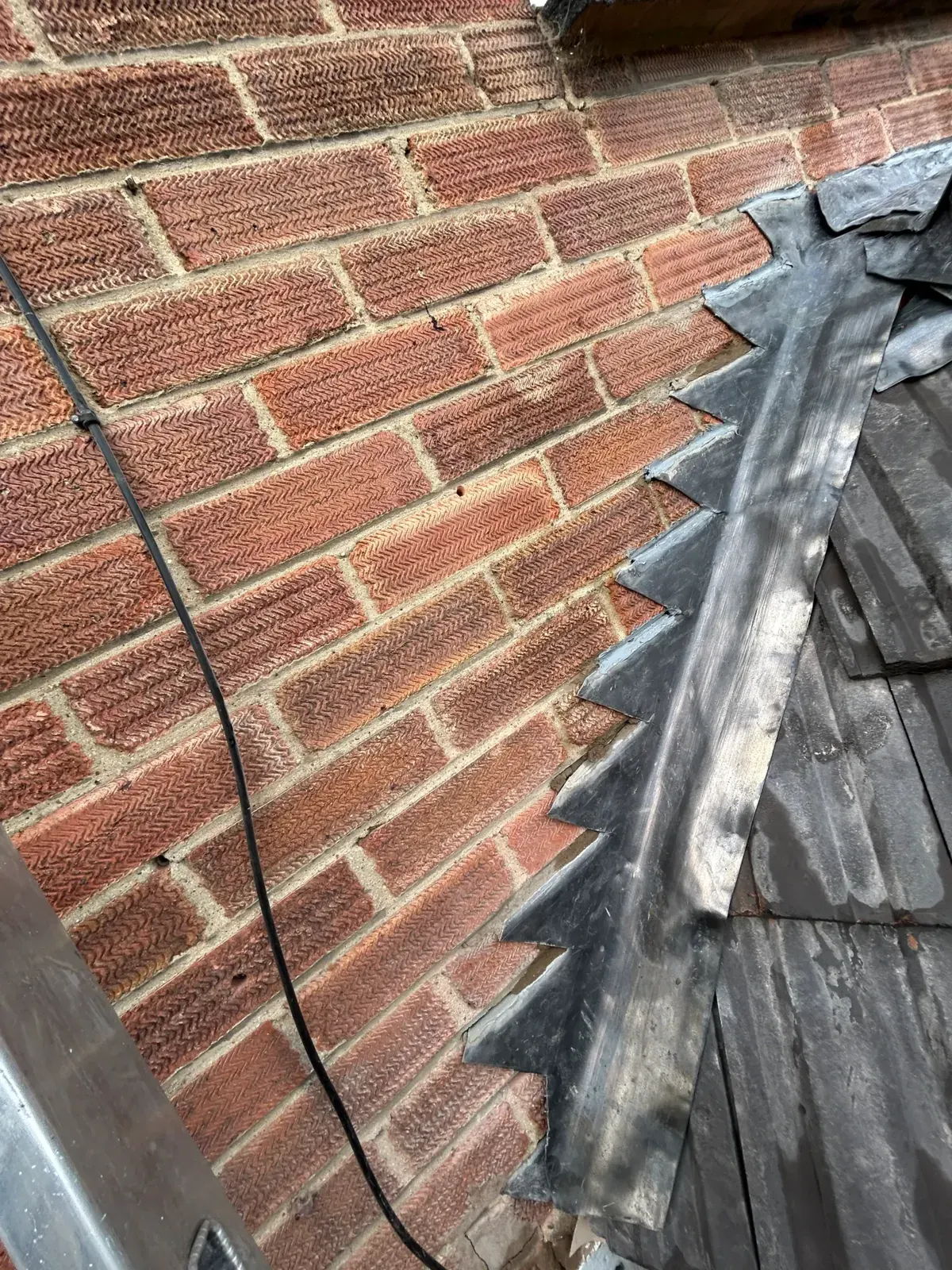
Where the chimney passes through the roof, the joint between the brickwork and the tiles or slates is sealed with lead flashing: a front apron, stepped flashings down the sides and a back gutter or saddle behind the stack. When that lead has split, lifted or been replaced with mortar fillets or sealant, water runs down inside the roof and shows up as damp on ceilings and chimney breasts.
We cut and dress new lead to fit the stack, chasing it properly into the mortar joints and finishing it so it moves with the building. Leadwork is one of our specialisms, and our guide on how long lead flashing lasts explains what to look for. See also our page on leadwork in Cambridge.
Leaning stacks
A chimney that has started to lean needs looking at sooner rather than later. Over many years, damp, sulphates from old coal fires and weather on one face can cause the mortar on one side of a stack to expand, slowly tipping it. A slight lean on an old stack is not always an emergency, but it should be checked, and a stack that is moving or has loose brickwork at the top can be a risk to the roof and anyone below.
Depending on what we find, the answer may be taking the stack down to sound brickwork and rebuilding it plumb, or in some cases reducing or removing an unused stack. We will explain the options and anything you may need to consider, such as whether your property is listed or in a conservation area, before any work starts.
Damp around chimney breasts
Damp patches on a chimney breast, upstairs or down, are one of the most common reasons people call us. The cause can be failed flashing, porous brickwork or pointing, cracked flaunching, an uncapped flue letting rain straight in, or a stack that has been blocked up without ventilation so condensation builds up inside it. Treating the stain on the wall will not fix any of these.
We inspect the stack from the roof, find where the water is getting in and put that right first. We take photos so you can see what we found, then give you a clear written quote. Safe access is part of every chimney job: depending on the roof and the work involved, that may be roof ladders, a chimney scaffold or a full scaffold, and we will explain what is needed.
Covering Cambridge and the surrounding villages
We cover the city and the villages around it, including Chesterton, Romsey, Newnham, Cherry Hinton, Trumpington, Histon, Impington, Milton and Waterbeach. You deal directly with Danny from the first call to the finished job. For chimney work closer to our base, see our page on chimney repairs in Ely, and for the full picture, our main chimney repairs service.
How we work.
A free inspection
We look at your roof carefully and explain what we find.
An honest written quote
Clear advice and a no-obligation quote. Repair before replace, where possible.
Careful, tidy work
Proper preparation, attention to the details and a daily tidy-up.
Work guaranteed
Fully insured. All work guaranteed. A roof finished properly.
Chimney repairs in Cambridge
FAQs.
Why is there damp on my chimney breast in Cambridge?
Common causes are failed lead flashing, worn pointing or soft brick, cracked flaunching, an uncapped flue or a blocked-up chimney with no ventilation. We inspect the stack from the roof to find where the water is getting in and fix the cause.
My terraced house shares a chimney with next door. Who repairs it?
Shared stacks on party walls are common in Cambridge terraces. Repairs often affect both houses, so it is usually best to agree the work with your neighbour. We can inspect and quote so you both know what is needed.
Is a leaning chimney dangerous?
A slight lean on an old stack is not always urgent, but it should be checked. If the stack is moving or bricks are loose at the top, it needs attention. We can rebuild it plumb or, where suitable, reduce or remove an unused stack.
What should I do with a chimney I no longer use?
Keep it weathertight and ventilated. A ventilated cap keeps rain and birds out while letting the flue breathe, which helps prevent damp. If the stack is in poor condition we can discuss repairs, reducing it or taking it down.
Do older Cambridge brick chimneys need a special mortar?
Older soft bricks are best repointed with a mortar that suits them, so the joints wear rather than the bricks. Hard cement pointing on soft brick can trap water and damage the faces, so we choose the mix to suit the chimney.
Related services.
Areas we cover.
Good work starts
with honest advice.
Free roof inspections. Free no-obligation quotes. Just the work your roof actually needs.
07862 885143Klarna.Klarna availableBased in Littleport, Ely.
Covering Cambridgeshire, Norfolk, Suffolk, Hertfordshire, Lincolnshire and North London.
Open 24 hours, 7 days.