Lead flashing seals the joints where a roof meets a chimney, wall, dormer or another roof slope. It is one of the longest-lasting materials on a roof, but it can still fail early if it is not fitted properly. This guide explains how long lead flashing usually lasts, why it sometimes fails sooner, the signs to look out for and when to repair or renew it.
How long does lead flashing last?
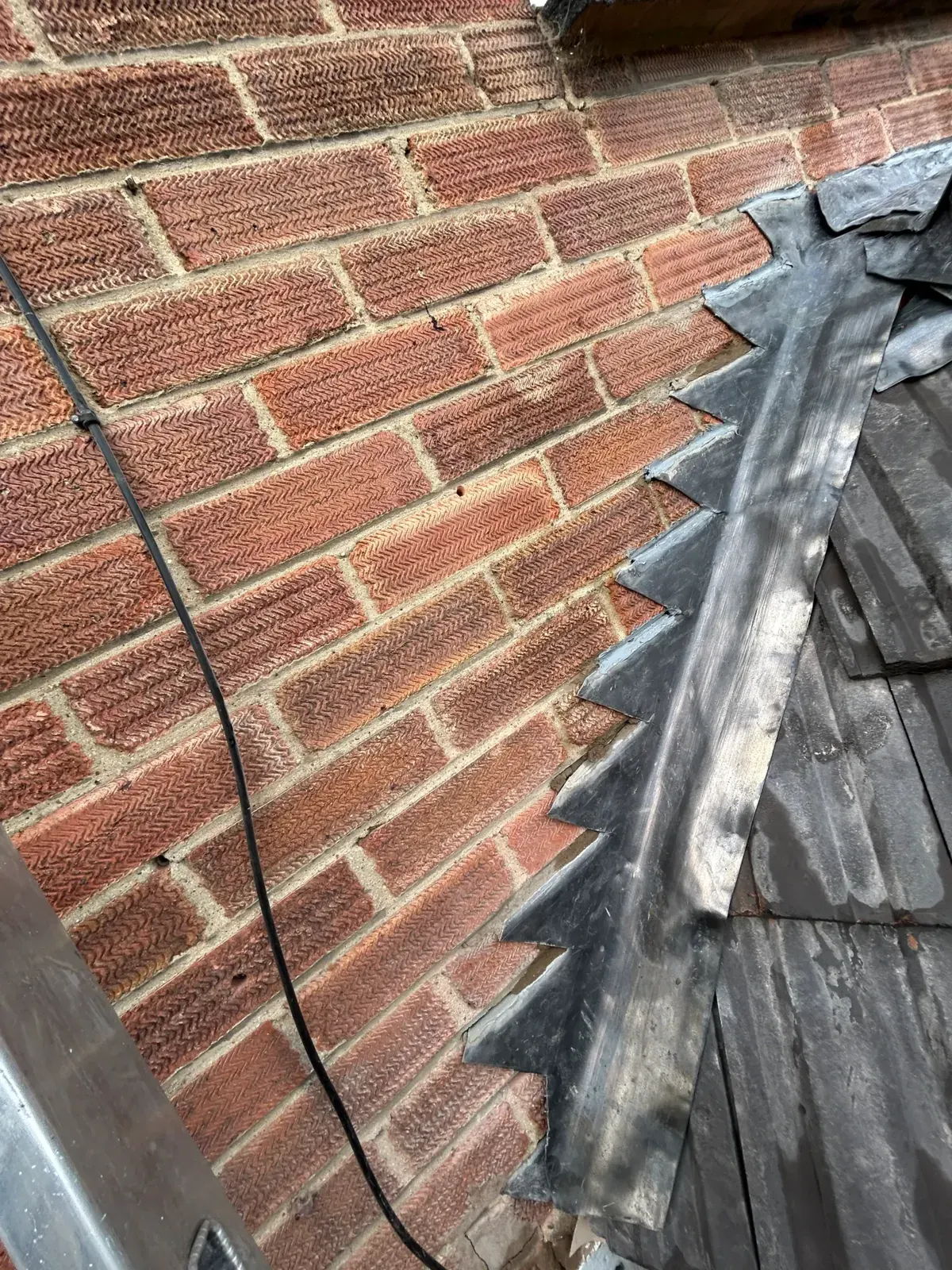
Properly installed lead flashing commonly lasts for many decades. Figures of 50 years or more are often quoted, and traditional leadwork on older buildings can last considerably longer. Lead does not rot, it resists corrosion well and it forms a protective surface layer as it weathers.
That long life depends on the lead being the right thickness for the job, fixed correctly and fitted in sensibly sized pieces with proper laps. Get those things right and the flashing will usually outlast the tiles around it. Get them wrong and problems can appear within a few years.
Why lead flashing fails early
Most early failures come down to installation. Lead expands and contracts with temperature, so pieces that are cut too long have no room to move and eventually crack, usually along a fold. Lead that is too thin for its position can split or lift, while lead that is too heavy can be hard to dress closely to the surface.
Fixing matters just as much. Flashings should be tucked into a mortar joint, held with lead wedges and then pointed. Where they are stuck on with mortar or sealant alone, the joint cracks and the lead works loose. Lead theft, impact damage from falling debris and accidental damage during other work can also shorten its life.
Signs your lead flashing needs attention
From the ground, look for lead that has lifted away from the brickwork, slipped down, bowed outwards or split. Missing pointing or wedges along the top edge of a flashing is a common early warning. White or dark staining running down a chimney stack can also suggest water is getting behind the lead.
Inside, watch for damp patches on a chimney breast, stains near a bay window or dormer, or wet timbers in the loft close to a valley or abutment. Water often travels before it shows, so the stain is not always directly below the fault. For a fuller checklist, see our guide to the signs your roof needs repair.
Repair or renew?
If the lead itself is sound, a repair is often enough. Loose flashings can be re-dressed, re-wedged and repointed, and a single damaged piece can sometimes be replaced without disturbing the rest.
If the lead is split in several places, was cut too long, or was fitted without proper fixings, renewing the whole detail is usually the better long-term option. Patching a poorly designed flashing tends to fail again. Our specialist leadwork page explains how we fit new lead, and our chimney repairs page covers chimney stacks in particular.
Why lead is still preferred for chimneys and valleys
Cheaper alternatives to lead exist, and some have their place. But for chimneys, valleys, bays and other awkward junctions, lead remains the traditional and widely preferred choice. It can be hand-dressed into complex shapes, it stays flexible, it moves with the building and it has a proven track record over generations.
On period homes, lead also looks right. Where a property is listed or in a conservation area, the council may expect like-for-like materials, which usually means lead.
Simple checks you can make yourself
You do not need to go on the roof to keep an eye on your leadwork. After a storm, and once or twice a year, look at chimneys, bays, dormers and valleys from the ground or an upstairs window, using binoculars if you have them. Check that flashings sit tight to the brickwork and that the pointing along the top edge is intact.
In the loft, look for staining on timbers around the chimney and beneath valleys, especially after heavy rain. Catching a loose flashing early is usually a simple repair, while leaving it can lead to wet timbers, damaged plaster and a much larger job. Our roof maintenance guide covers other seasonal checks.
How DJW checks leadwork during an inspection
Leadwork is in our name, and we check it on every roof inspection. We look at the condition of the lead, the size of each piece, how it is fixed into the brickwork, the state of the pointing and wedges, and whether laps and joints allow for movement. We also look for signs that water has already been getting in.
We take photographs so you can see exactly what we have found and explain clearly whether a repair or renewal is needed. If you live in or near Cambridge, see our page on leadwork in Cambridge. Inspections and quotes are free; call 07862 885143 to arrange one.
Frequently asked questions
How long should lead flashing last?
Properly installed lead flashing commonly lasts many decades, often quoted as 50 years or more, and traditional leadwork can last longer still.
Why has my lead flashing cracked?
Cracking usually happens when pieces are cut too long and cannot expand and contract freely, or when the lead is the wrong thickness for its position.
Can lead flashing be repaired?
Often, yes. Sound lead can be re-dressed, re-wedged and repointed, or a single damaged section replaced. Poorly fitted lead is usually better renewed.
Should lead flashing be fixed with mortar?
Flashings should be tucked into a mortar joint and held with lead wedges before pointing. Relying on mortar or sealant alone often leads to the joint cracking and the lead working loose.
Do you check leadwork during a roof inspection?
Yes. We check the lead, its fixings and pointing on every inspection and show you photos of what we find. Inspections are free.