
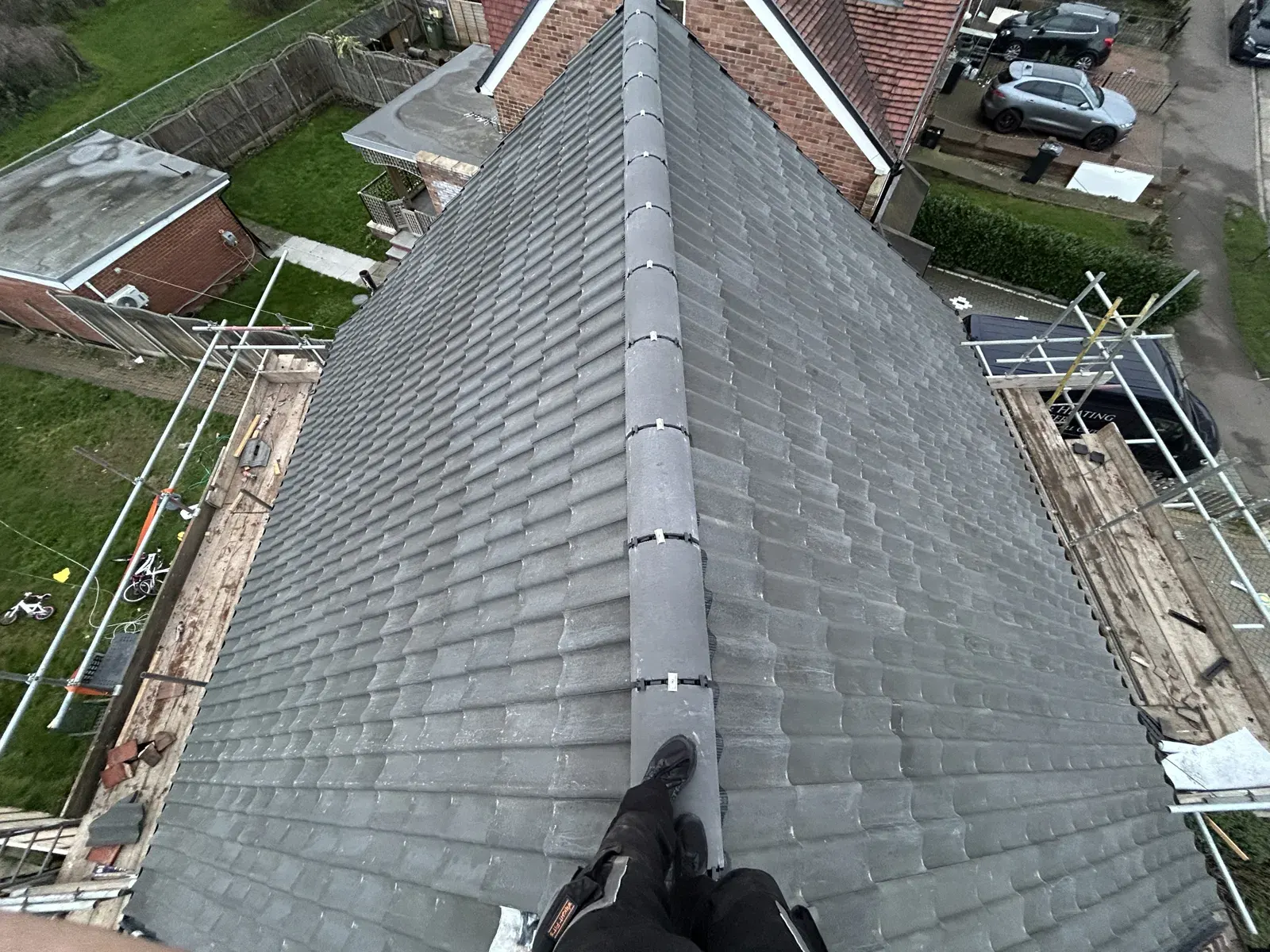
A drip from the ceiling after a downpour is one of the most common calls we get, especially through autumn and winter when heavy rain and wind arrive together. The good news is that most leaks have a simple cause and can be put right with a targeted repair. The key is to stop the damage spreading inside, work out roughly where the water is getting in, and get it looked at before a small problem becomes a soaked ceiling or rotten timbers.
What to do straight away
Catch the water. Put a bucket or bowl under the drip and lay towels down to protect the floor.
Move anything valuable. Shift furniture, electronics and anything that can't get wet out of the way.
Be careful with electrics. If water is coming through near a light fitting, a ceiling rose or sockets, don't touch them. Switch that circuit off at the consumer unit if it's safe to do so, and get an electrician to check it before switching back on.
Ease a bulging ceiling carefully. If the plaster is sagging with trapped water, it can come down suddenly. Keep people out of the room underneath.
Take photos. Photograph the drip, the stain and any damage inside, with the date. It's useful later, especially if you end up making an insurance claim (see our storm damage and insurance guide).
Never go up on the roof yourself
Wet tiles, slates and flat roofs are slippery, and a roof in a storm is no place to be. Leave anything above ground level to a roofer with the right access equipment and insurance. Everything we suggest below can be done safely from the ground, from a window or from inside the loft.
The most common causes of a leak after heavy rain
Slipped, cracked or missing tiles and slates. Strong wind lifts and shifts them, and heavy rain finds the gap. A single slipped tile is often enough to cause a drip inside. (Roof repairs)
Failed flashing around chimneys, walls and dormers. Where the roof meets a chimney or a wall, the joint is sealed with lead flashing. If the lead has split, lifted or worked loose, rain can run straight down the inside of the chimney or wall. This is one of the most common sources of leaks we find. (Leadwork · Chimney repairs)
Cracked or loose mortar on ridges and verges. Traditional mortar bedding along the ridge and the roof edges cracks and washes out over the years. Once it goes, wind-driven rain gets in. (Dry ridge and verge)
Blocked gutters, valleys and downpipes. When leaves and moss block a gutter or a roof valley, water backs up and overflows, sometimes into the roof space or down the inside of a wall. (Gutters)
Flat roof problems. Older felt flat roofs on extensions, garages and dormers crack, blister and split at the edges and outlets. Ponding water finds any weakness. (Flat roofing)
Condensation, not a leak at all. Sometimes damp in a loft or on a ceiling is condensation rather than rain, especially in cold weather or where loft ventilation is poor. If the damp appears on cold, still days rather than straight after rain, condensation may be the cause.
What you can safely check yourself
From the ground: look for tiles or slates that are out of line, missing, or lying in the garden or gutter. Check whether gutters are overflowing during rain, and whether any lead around the chimney looks lifted or bent. Binoculars help.
In the loft (only if you can get in safely and there's boarding to stand on): with a torch, look for wet patches, drips or daylight on the underside of the roof. Water often travels along rafters or the felt before it drips, so the wet patch on your ceiling may not be directly below the hole. Note where you see water and tell your roofer.
Notice the pattern: does it leak in every downpour, or only when wind and rain come from one direction? Leaks that only happen in wind-driven rain often point to flashing, verges or ridges.
Temporary fixes: what's sensible and what isn't
Buckets, towels and moving things out of the way are sensible. Climbing a ladder in the rain to put a sheet or sealant on the roof isn't. If the leak is bad, call a roofer to make it safe: we offer 24/7 emergency call-outs, and a proper temporary repair stops the damage spreading until the permanent repair is done.
How we find and fix a leak
We start with a free inspection, inside and out. We find where the water is actually getting in, photograph what we find so you can see it for yourself, and give you a clear quote for the repair. Most leaks are put right with a targeted repair: re-fixing or replacing tiles, renewing a section of lead flashing, rebedding or converting a ridge, or clearing and repairing gutters. If the roof is genuinely at the end of its life, we'll tell you honestly and explain the options, but we only recommend the work your roof needs. All our work is fully insured and guaranteed.
When to call a roofer
Call us if water is coming through a ceiling, if you can see missing or slipped tiles or slates, if lead around the chimney has lifted, or if the same leak keeps coming back. The sooner it's looked at, the less damage there is to fix inside. Call DJW Roofing & Leadwork on 07862 885143, any time, or request a free quote.
Frequently asked questions
Why does my roof only leak when it rains heavily?
Light rain runs off the roof as it should, but heavy or wind-driven rain is pushed into small gaps: a slipped tile, a split in the lead flashing, or cracked mortar on a ridge or verge. Leaks that only appear in storms usually point to one of these weak spots.
Is a roof leak an emergency?
If water is coming through a ceiling, near electrics, or the ceiling is bulging, treat it as urgent. We offer 24/7 emergency call-outs to make the roof safe, then come back to carry out the permanent repair.
Can a leak be repaired, or do I need a new roof?
Most leaks can be repaired. A new roof is only needed when the roof covering as a whole has failed, for example widespread slipped tiles, perished felt or rotten battens. We'll inspect it and explain honestly which applies.
Will my home insurance cover a roof leak?
It depends on your policy and the cause. Insurers often cover sudden storm damage but exclude wear and tear and gradual deterioration. Photograph the damage, keep receipts for emergency repairs and contact your insurer early. Our storm damage guide explains more.
How can I stop leaks happening again?
Keep gutters and valleys clear, get any slipped tiles or lifted lead fixed promptly, and have the roof checked every few years or after a big storm. Converting an old mortar ridge to a dry ridge system can also stop a common source of leaks.