
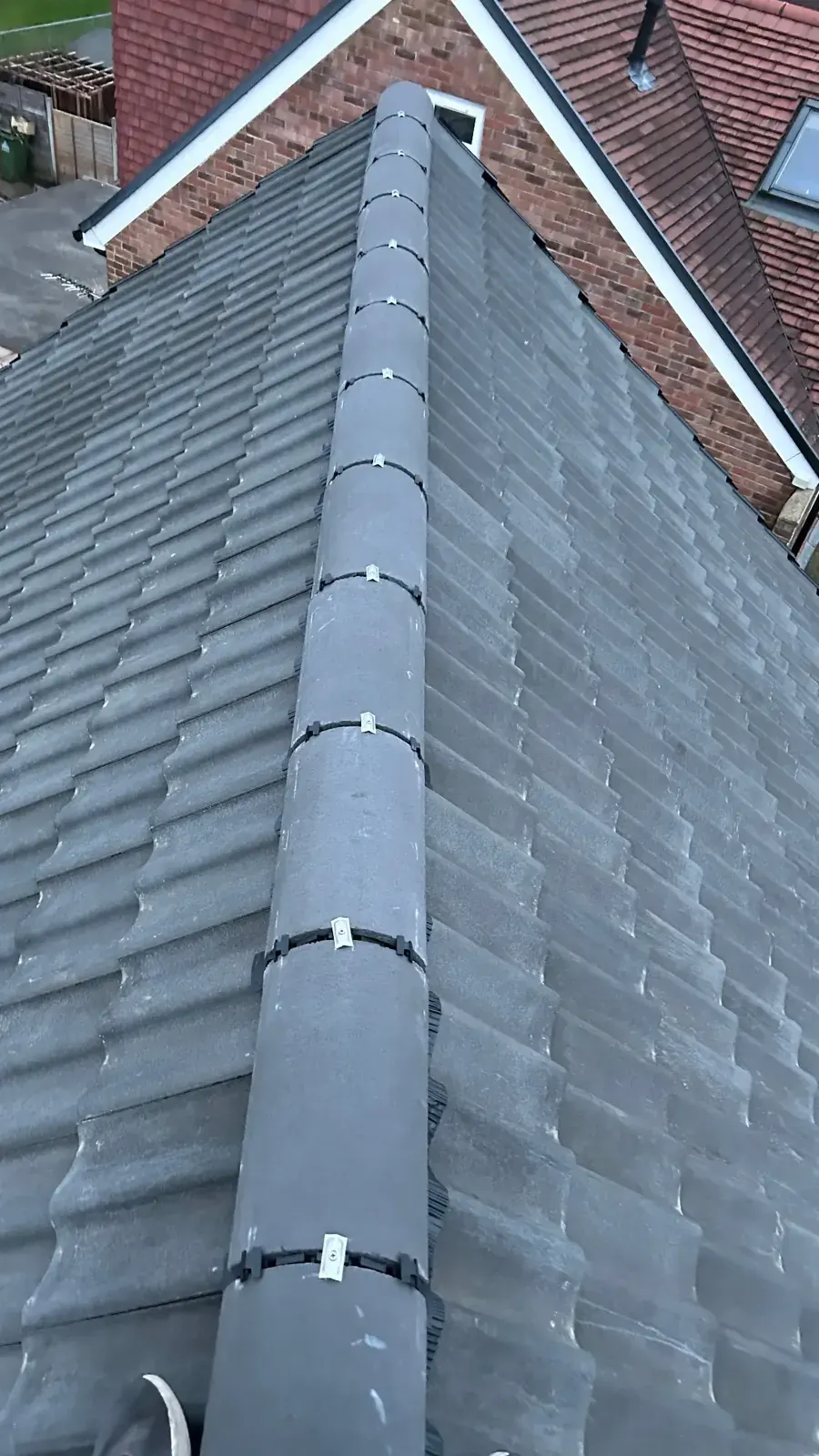
The ridge is the line of tiles along the very top of your roof, and it takes the full force of the weather. If you've been told your ridge needs "repointing" or "rebedding", or a roofer has suggested a "dry ridge", this guide explains the difference in plain English so you can make the right call for your home.
What is a mortar ridge?
On a traditional mortar ridge, the ridge tiles are bedded on a strip of sand and cement mortar along the top of the roof, and the joints between the tiles are filled with mortar too. It's how most older roofs in Cambridgeshire, Norfolk and Suffolk were finished, and it gives the familiar, solid look many people expect on a period home.
What is a dry ridge?
A dry ridge system fixes the ridge tiles mechanically instead of relying on mortar. A timber batten or metal bracket runs along the ridge, a breathable roll seals the gap underneath, and each ridge tile is screwed or clipped down, with union pieces covering the joints between tiles. There's no mortar to crack or wash out. The same idea is used along the edges of the roof as a dry verge.
Why mortar ridges fail
Mortar doesn't move with the roof. Over years of heating, cooling, frost and wind, it cracks, shrinks away from the tiles and washes out. Common signs include:
• Cracked or missing mortar along the ridge, or bits of mortar in the gutter or on the ground
• Ridge tiles that are loose, rocking or out of line
• Damp or a leak near the top of an internal wall or in the loft along the ridge
• A ridge tile blown off in a storm
On older roofs, ridges are often only held by the mortar. Once that lets go, a strong wind can lift a ridge tile off completely, which is dangerous as well as letting water in.
The building standard
The British Standard for slating and tiling (BS 5534) was revised in 2014 so that mortar can no longer be relied on by itself to hold ridge and hip tiles in place: they must also be mechanically fixed. Mortar can still be used for bedding, but with mechanical fixings as well. A dry ridge system meets this requirement, and on new roofs and re-roofs ridges must be fixed this way.
Pros and cons
Dry ridge
• Mechanically fixed, so ridge tiles are far less likely to blow off
• No mortar to crack, wash out or need repointing, so very little maintenance
• Lets the roof space breathe along the ridge, which can help with condensation
• Neat, uniform finish; works with most common tiles
• The visible union pieces between tiles give a slightly different look to a traditional ridge
Mortar ridge (with mechanical fixing)
• Traditional look, which can matter on period homes
• May be preferred, or required, on listed buildings and in some conservation areas (see our planning permission guide)
• Mortar will eventually need repointing or rebedding again as it weathers
Which one should you choose?
For most homes, especially modern and post-war houses, a dry ridge is the low-maintenance, long-term choice, and it's what we usually recommend when a ridge needs rebedding anyway. On period, listed or conservation-area properties where the traditional look matters, a properly rebedded mortar ridge with mechanical fixings can be the right answer. We'll look at your roof, your tiles and your property and explain the options honestly.
Can you convert a mortar ridge to a dry ridge?
Yes. We carefully lift the ridge tiles, clean off the old mortar, fit the ridge batten or brackets and the breathable roll, then refix the tiles mechanically. If the existing ridge tiles are in good condition they can usually be reused. It's a common job and a good time to do it is when the mortar is already failing, or when other roof work is being done. We often do the same on the verges at the same time. See dry ridge and verge systems.
Get your ridge checked
If your ridge mortar is cracking, tiles are loose or you've found bits of mortar in the garden, get it looked at before a storm does the job for you. DJW Roofing & Leadwork offer free roof inspections and quotes, all work is fully insured and guaranteed, and we have 20 years in business. Call 07862 885143 or request a free quote.
Frequently asked questions
Is a dry ridge better than a mortar ridge?
For most homes, yes: it's mechanically fixed, doesn't need repointing and is far less likely to lose tiles in high winds. A traditional mortar ridge with mechanical fixings can still be the better fit on period, listed or conservation-area homes where appearance matters.
Do ridge tiles have to be mechanically fixed?
Under BS 5534, as revised in 2014, mortar alone can no longer be relied on to hold ridge and hip tiles in place, so they need mechanical fixing too. A dry ridge system meets that requirement.
Can my existing ridge tiles be reused?
Usually, yes, if they're sound. We lift them carefully, clean them and refix them. Any cracked or damaged tiles are replaced with matching ones where possible.
Do I need scaffolding for a ridge repair?
It depends on the height and layout of the roof and how safe access is. We'll assess it at the free inspection and include whatever access is needed in your quote.
What about dry verge?
A dry verge does the same job along the sloping edges (gable ends) of the roof, replacing mortar with interlocking caps that are fixed in place. It's often done at the same time as a dry ridge.